Sunday, 22 July 2012

Childrens Footwear

Childrens Footwear

A shoe size is an alphanumerical indication of the fitting size of a shoe for a person. Often it just consists of a number indicating the length because many shoemakers only provide a standard width for economic reasons.
There are several different shoe-size systems that are used worldwide. These systems differ in what they measure, what unit of measurement they use, and where the size 0 (or 1) is positioned. Only a few systems also take the width of the feet into account. Some regions use different shoe-size systems for different types of shoes (e.g., men's, women's, children's, sport, or safety shoes).
The length of a foot is commonly defined as the distance between two parallel lines that are perpendicular to the foot and in contact with the most prominent toe and the most prominent part of the heel. Foot length is measured with the subject standing barefoot and the weight of the body equally distributed on both feet.
The sizes of the left and right feet are often slightly different. In this case, both feet are measured, and purchasers of mass-produced shoes are advised to purchase a shoe size based upon the larger foot.
Each size of shoe is suitable for a small interval of foot lengths. The inner cavity of a shoe must typically be 15–20 mm longer than the foot, but this relation varies between different types of shoes.
There are three characteristic lengths that a shoe-size system can refer to:
  • The median length of feet for which a shoe is suitable. For customers, this measure has the advantage of being directly related to their body measures. It applies equally to any type, form, or material of shoe. However, this measure is less popular with manufacturers, because it requires them to test carefully for each new shoe model, for which range of foot sizes it is recommendable. It puts on the manufacturer the burden of ensuring that the shoe will fit a foot of a given length.
  • The length of the inner cavity of the shoe. This measure has the advantage that it can be measured easily on the finished product. However, it will vary with manufacturing tolerances and provides the customer only very crude information about the range of foot sizes for which the shoe is suitable.

Childrens Footwear

Childrens Footwear

Childrens Footwear

Childrens Footwear

Childrens Footwear

Childrens Footwear

Childrens Footwear

Childrens Footwear

Childrens Footwear


Saturday, 21 July 2012

Clogs Footwear

Clogs Footwear

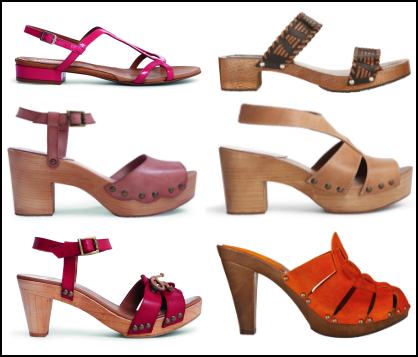
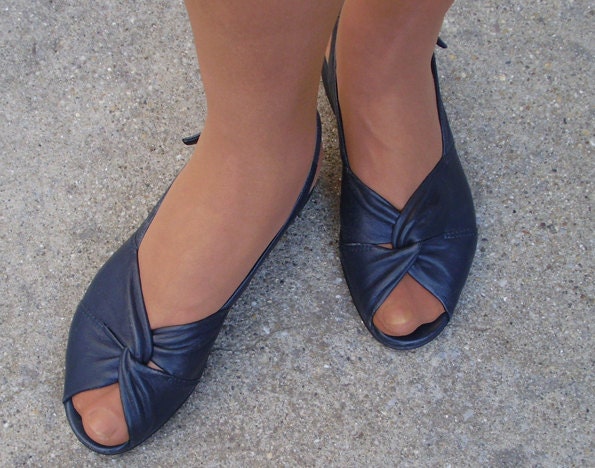
A clog is a type of footwear made in part or completely from wood. Clogs are used worldwide and although the form may vary by culture, within a culture the form often remained unchanged for centuries.
Traditional clogs were often worn in heavy labor. Today they remain in use as protective clothing in agriculture and in some factories and mines. Although clogs are sometimes negatively associated with cheap and folkloric footwear of farmers and the working class, some types of clogs are considered as fashion wear today, such as Swedish clogs or Japanese geta.
Clogs are also used in several different styles of dance. When worn for dancing an important feature is the sound of the clog against the floor. This is one of the fundamental roots of tap, but with the tap shoes the taps are free to click against each other and produce different sound to clogs.
The Oxford English Dictionarydefines a clog as a "thick piece of wood", and later as a "wooden soled overshoe" and a "shoe with a thick wooden sole".
Clogs are found in three main varieties: whole foot, wooden soled and overshoes.
  • Whole foot clogs make the complete shoe out of wood, such as the familiar Dutch klomp. They are also known as "wooden shoes". Whole foot clogs can give sufficient protection to be used without additional reinforcements.
  • Wooden soled clogs use wood for the sole only. Wooden soled clogs come with a variety of uppers:
    • complete uppers made from leather or similar material (see English clogs). For more protection, they may have steel toecaps and/or steel reinforcing inserts in the undersides of the soles
    • open sandal type fitting (see Japanese geta)
    • toe peg styles (see Indian paduka)
  • Overshoes are wooden soles with straps designed to be worn over other footwear for protection, commonly known as pattens.
These divisions are not fixed: some overshoes look more like whole foot clogs (see Spanish albarca) whilst other wooden soled clogs raise and protect clothing in the way that overshoes do, see Japanese geta.

Clogs Footwear

Clogs Footwear

Clogs Footwear

Clogs Footwear

Clogs Footwear

Clogs Footwear

Clogs Footwear
Clogs Footwear

Clogs Footwear


Kangaroo Footwear

Kangaroo Footwear

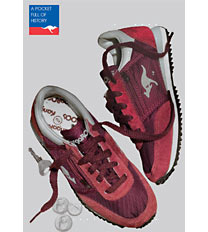
KangaROOS are an American brand of sneaker originally produced from 1979 through the 1980s, with a later revival that continues in present. They were notable for having a small zippered pocket on the side of the shoe, large enough for a small amount of loose change, keys, or more recently, condoms.
KangaROOS were designed by American architect and jogging enthusiast Bob Gamm. Gamm was a running enthusiast who would go ten kilometers a day, but preferred light athletic clothes without pockets. He designed the sneakers for his own personal use as a place to store his keys and money, then marketed them effectively. His marketing design was successful, leading to sales in excess of 700,000 pairs a month by the early 1980s.
Further refinements on the original design led to several significant innovations in athletic footwear. One such innovation, the Dynacoil, was a patented energy release system designed in the mid-1980s by former Nike designer Ray Tonkel and consultant Al Gross and tested by NASA. Many other athletic shoe manufacturers would later incorporate similar designs into their shoes. In the early- to mid-1980s many USA professional athletes wore ROOS football and baseball shoes as well as shoes for running and training. Notables included Walter Payton, O.J. Anderson, William (the Fridge) Perry (football), Ozzie Smith, Vince Coleman and Ron Darling (baseball), and Kenyan track stars (running).There was a faddish dimension to the shoes, which became very popular among both casual athletes and American schoolchildren. Gamm himself remained committed to KangaROOS as serious athletic footwear, and in 1985 he worked with a 10,000-square-meter testing facility called the KangaROOS Laboratory & Gymnasium at the U of Illinois. This allowed for refinement and development of the sneakers for many different sports, including American football, basketball, hockey, tennis, and track and field.

Kangaroo Footwear

Kangaroo Footwear

Kangaroo Footwear

Kangaroo Footwear

Kangaroo Footwear

Kangaroo Footwear

Kangaroo Footwear

Kangaroo Footwear

Kangaroo Footwear


Pleaser Footwear

Pleaser Footwear

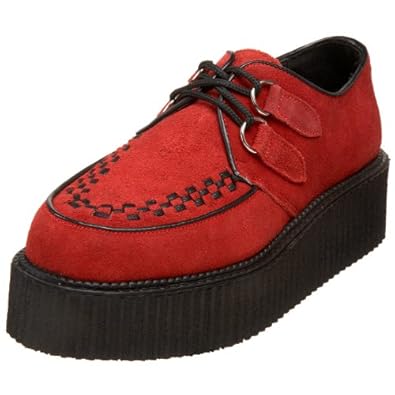
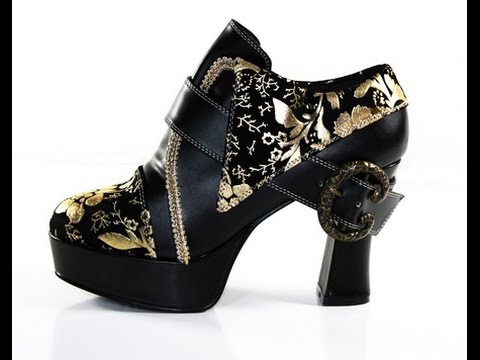
Folk have their favourite shoe brands for different occasions, but with Pleaser shoes and Pleaser boots, there are lots of choices for work, nights out and play, all of which will make any girl feel horny. Pleaser by name, Pleaser by nature.Visit our website for pleaserLadies love shoes and even if they don't own as many shoes as Imelda Marcos, they anonymously wish they could change their shoes as frequently as their socks, or nylons, you might say. Though some shoe brands prices are beyond many standard people's's means, the Pleaser brand offers some seriously sexy and stylish shoes for all occasions.If these shoes are Pleaser shoes, you can know that you are wearing a well made pair of ultra stylish shoes at a fraction of the cost of your average Christian Louboutin, or Manolo Blahnik.You come back that evening from work, take a look in your wardrobe, decide on the garments you want for an evening out, perhaps a pleasant meal at a restaurant, or a club and again you've got a good choice of color, style and heel size, or consider 2 platform Pleaser boots.The last sort of Pleaser boots I should mention are for play and you'd definitely find them in my walk in wardrobe. Play that your partner will love, as they'll fall in love with your thigh high Pleaser boots.

Pleaser Footwear

Pleaser Footwear

Pleaser Footwear

Pleaser Footwear

Pleaser Footwear

Pleaser Footwear

Pleaser Footwear

Pleaser Footwear

Pleaser Footwear


Alternative Footwear

Alternative Footwear

Vibram FiveFingers are a type of minimalist shoe manufactured by Vibram, originally marketed as a more "natural" alternative for different outdoors activities (sailing, kayaking, canoeing, and as a camp or after-hike shoe). The footwear is meant to replicate being barefoot and has thin, flexible soles that are contoured to the shape of the human foot, including visible individual sections for the toes.Invented in 1999 by Robert Fliri, a design student from Vinschgau who wanted to "figure out a way to move around in nature better." Vibram FiveFingers were developed and introduced in 2005.Vibram FiveFingers were originally targeted to yacht racers to maintain grip on slippery decks without compromising the barefoot experience. Their potential use as a minimalist running shoe was suggested to the Vibram CEO by Ted McDonald, a runner who earned the nickname "barefoot Ted" for his unshod feet and successful career as a barefoot running coach. The purpose of these shoes as outlined by the manufacturers is to provide footwear to be mainly used for fitness, running, water sports, yoga, trekking and travelling, and other sports.Vibram FiveFingers come in a variety of shapes and sizes, including the men's KomodoSport, KomodoSport LS,FiveFingers SPYRIDON,FiveFingers CLASSIC, FiveFingers Sprint, FiveFingers FLOW, FiveFingers KSO, FiveFingers TrekSport, FiveFingers Trek LS, FiveFingers KSO Trek, FiveFingers BIKILA, FiveFingers Bikila LS, FiveFingers Speed, and FiveFingers Bormio.

Alternative Footwear

Alternative Footwear

Alternative Footwear

Alternative Footwear

Alternative Footwear

Alternative Footwear

Alternative Footwear

Alternative Footwear

Alternative Footwear

Echo Footwear

Echo Footwear

ECCO Sko A/S is a Danish shoe manufacturer and retailer founded in 1963 by Karl Toosbuy in Bredebro, Denmark. Originally a footwear maker only, the company has since added leather production and accessories to its extensive range of mens, women's, and children's shoes.
ECCO claims to be the only major shoe company in the world to own and manage every step of the production process – from tannery to consumer. ECCO opened its first retail store in Denmark in 1982, and has since expanded to have more than 4,000 branded sales locations throughout the world.
ECCO was established in 1963 by Karl Toosbuy in the small town of Bredebro in southern Denmark. Toosbuy founded the company on the philosophy that “shoes must follow the foot” and not the other way around. His idea was to produce shoes that combined innovative technology, Scandinavian design, and traditional craftsmanship with an understanding of the human foot, and how it works.
In 1978, the company made its first real breakthrough, and gained widespread international recognition for its comfort footwear, when it launched the "Joke" shoe, followed by the classics "Free" and "Time". These shoes were the first in the world to feature a sole imprinted with the manufacturer's logo. Over eight million pairs of shoes from this group have been sold since then.
Throughout the 1980s, the company expanded its operations internationally. By 1982, sales reached 1 million pairs of shoes annually. In order to accommodate the increasing demand additional production was established in Portugal, and under licence in Japan and Cyprus.

Echo Footwear

Echo Footwear

Echo Footwear

Echo Footwear

Echo Footwear

Echo Footwear

Echo Footwear

Echo Footwear

Echo Footwear


Shoe Brand Names

Shoe Brand Names


3

  • 361 Degrees

A

  • Adidas
  • Airness
  • Alberto Fermani
  • Alden Shoe Company
  • ALDO Group
  • Allen Edmonds
  • ANTA Sports
  • Ariat
  • Atletica
  • Avia (shoes)

B

  • Bally Shoe
  • Bearpaw (footwear)
  • Belle International
  • Bontoni
  • British Knights
  • Brooks Sports
  • Brown Shoe

C

  • Camper (company)
  • Canterbury of New Zealand
  • Caterpillar Inc.
  • Charles & Keith
  • Church's
  • Circa (company)
  • Colchester (footwear brand)
  • Colchester Rubber Co.
  • Cole Haan
  • Columbia Sportswear
  • Crocs
  • Cydwoq

D

  • Damani Dada
  • DC Shoes
  • Dr. Martens
  • Dunlop Sport (Australia)
  • Dunlop Volley


Shoe Brand Names

Shoe Brand Names

Shoe Brand Names

Shoe Brand Names

Shoe Brand Names

Shoe Brand Names

Shoe Brand Names

Shoe Brand Names

Shoe Brand Names